Admin KBS
Author
Introduction
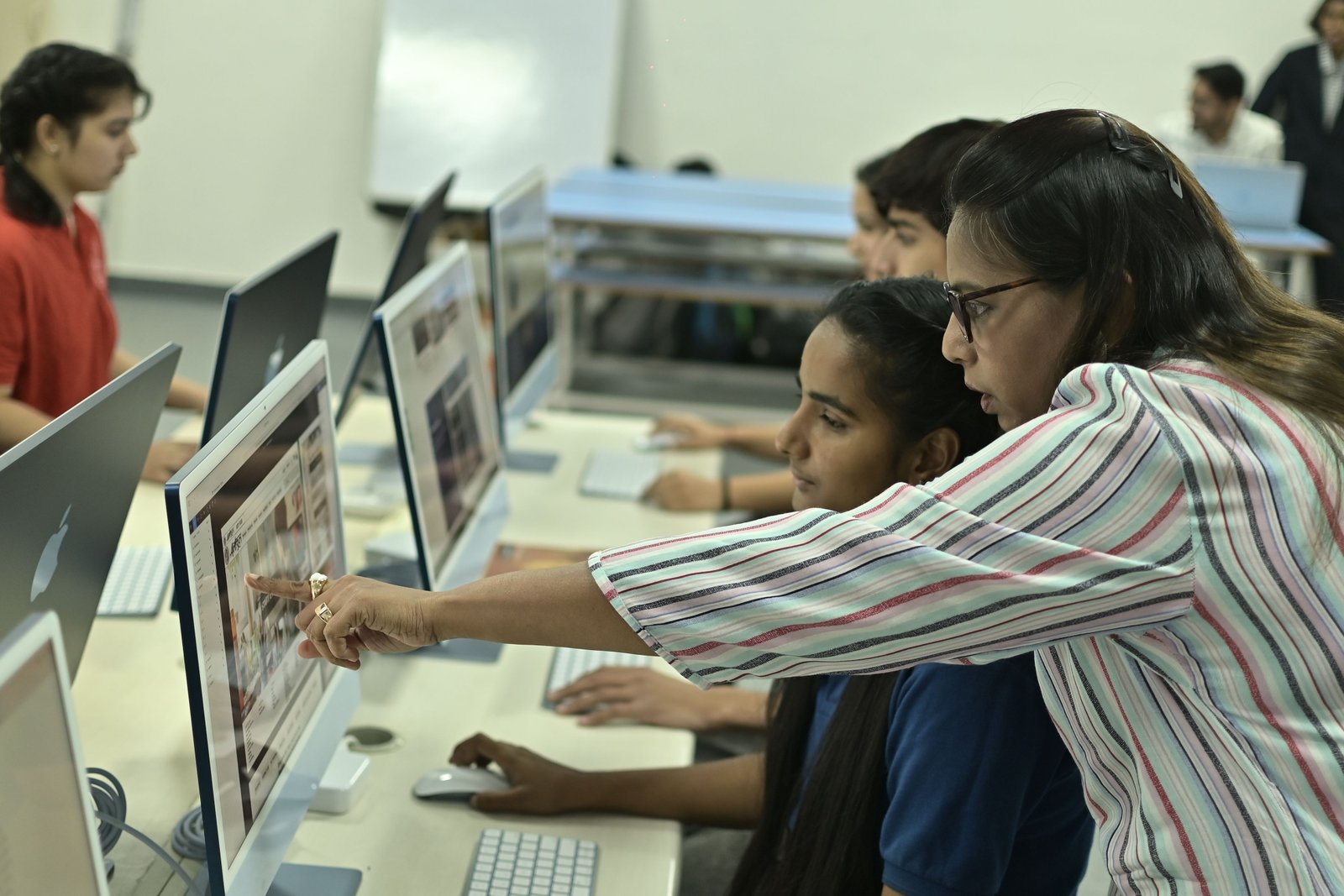
The debate regarding digital examinations and manual examinations is not a new phenomenon in the world of education.
As the use of technology in schools continues to increase, various perspectives have emerged regarding the effectiveness of digital assessment compared to conventional paper-based and handwritten assessment.
Some argue that digital examinations improve efficiency, objectivity, and the speed of processing learning outcomes.
On the other hand, some educators are concerned that the overly dominant use of technology may reduce students’ literacy, writing skills, critical thinking, and depth of understanding.
However, the more important question is actually not:
• "Which is better, digital or manual?"
But rather:
• "How can schools build an assessment system that truly measures students’ competencies comprehensively?"
21st-Century Assessment Requires a Broader Perspective
For many years, many schools have viewed assessment as an activity identical to examinations.
In fact, assessment has a much broader meaning.
Assessment is a systematic process of collecting information about the development of students’ competencies in order to support more effective learning.
In the context of 21st-century education, assessment is not only intended to measure the ability to remember information, but also the ability to:
• think critically;
• solve problems;
• communicate;
• collaborate;
• create;
• make decisions.
Therefore, the future of school assessment cannot be limited only to the debate about the medium being used.
Why the Digital vs Manual Debate Is Often Misleading
The debate between digital and manual often directs attention to the tool, not the purpose.
In fact, the quality of assessment is not determined by whether questions are answered through a computer screen or on a sheet of paper.
The quality of assessment is determined by:
• the competencies being measured;
• the quality of the assessment instruments;
• the validity of the questions;
• the reliability of the assessment;
• the meaningfulness of the assessment results.
A poor question will remain a poor question even if it is presented digitally.
Conversely, a well-designed question will still be able to measure students’ competencies effectively even when using technology.
Therefore, the main focus of schools should not be choosing between digital or manual, but ensuring that the assessments used are truly high quality.
The Evolution of Global Educational Assessment
Various countries with advanced education systems show that the future of assessment is not moving toward one particular method.
Instead, what is happening is the diversification of assessment methods.
Several forms of assessment that are increasingly being used include:
Digital Assessment
The use of technology for the implementation, management, and analysis of assessment results.
Essay Assessment
Measuring critical thinking, argumentation, and literacy skills.
Project-Based Assessment
Measuring students’ abilities through real project work.
Portfolio Assessment
Measuring students’ competency development on an ongoing basis.
Performance Assessment
Measuring skills through practice and demonstration of ability.
Authentic Assessment
Measuring students’ abilities in real-world contexts.
Global trends show that excellent schools are not schools that choose one best method, but schools that are able to integrate various assessment methods in a balanced way.
Hybrid Assessment: A Bridge to the Future
One approach that is increasingly being applied is Hybrid Assessment.
Hybrid Assessment combines the strengths of various assessment methods in one integrated system.
For example:
• Multiple-Choice Questions to measure mastery of basic concepts;
• Essays to measure analytical and argumentative skills;
• Case Studies to measure problem-solving skills;
• Projects to measure competency application;
• Portfolios to measure long-term development.
This approach provides a more complete picture of students’ abilities compared to when schools rely on only one type of assessment.
The Role of Technology in the Future of Assessment
Technology does not replace the role of teachers.
Instead, technology functions as a tool that helps teachers carry out assessments more effectively.
Some benefits of technology in school assessment include:
Administrative Efficiency
Reducing repetitive administrative work.
Learning Analytics
Helping teachers understand patterns in students’ competency achievements.
Better Documentation
Storing the history of students’ development systematically.
Learning Personalization
Helping schools provide more appropriate interventions according to students’ needs.
Thus, technology should be viewed as a supporter of quality assessment, not as a threat to the quality of education.
Challenges Schools Must Anticipate
Although the future of assessment offers many opportunities, there are several challenges that need to be anticipated.
Teacher Readiness
Teachers need training in modern assessment design and the development of HOTS questions.
Instrument Quality
Assessment instruments must be designed to be valid and reliable.
Student Learning Culture
Students need to become accustomed to learning deeply, not merely memorizing answers.
Technology Integration
The use of technology must remain oriented toward learning objectives.
Competencies That Need to Be Measured in the Future
The future of education requires schools to measure more than just academic knowledge.
Several increasingly important competencies include:
• Critical Thinking
• Problem Solving
• Creativity
• Communication
• Collaboration
• Digital Literacy
• Self-Regulated Learning
• Adaptability
• Resilience
Future assessment must be able to capture the development of these competencies more comprehensively.
Recommendations for Schools
Develop a School Assessment Strategy
Schools need to have a structured and sustainable assessment policy.
Combine Various Assessment Methods
Do not rely only on multiple-choice questions or essays.
Strengthen HOTS Assessment
Increase the proportion of questions that measure higher-order thinking skills.
Use Technology Strategically
Use technology to support assessment quality, not merely to digitize administration.
Develop a Culture of Reflection
Encourage students to understand the learning process, not just pursue scores.
Towards an Integrated School Assessment Ecosystem
In the future, schools need a system that is able to manage various forms of assessment within one ecosystem.
Ideally, the system should be able to support:
• Multiple-Choice Examinations;
• Essay Examinations;
• Hybrid Assessment;
• Project Assessment;
• Portfolio Assessment;
• Performance Assessment;
• Learning Outcome Analysis;
• Student Competency Dashboard.
This approach is the direction in which various modern educational platforms are developing.
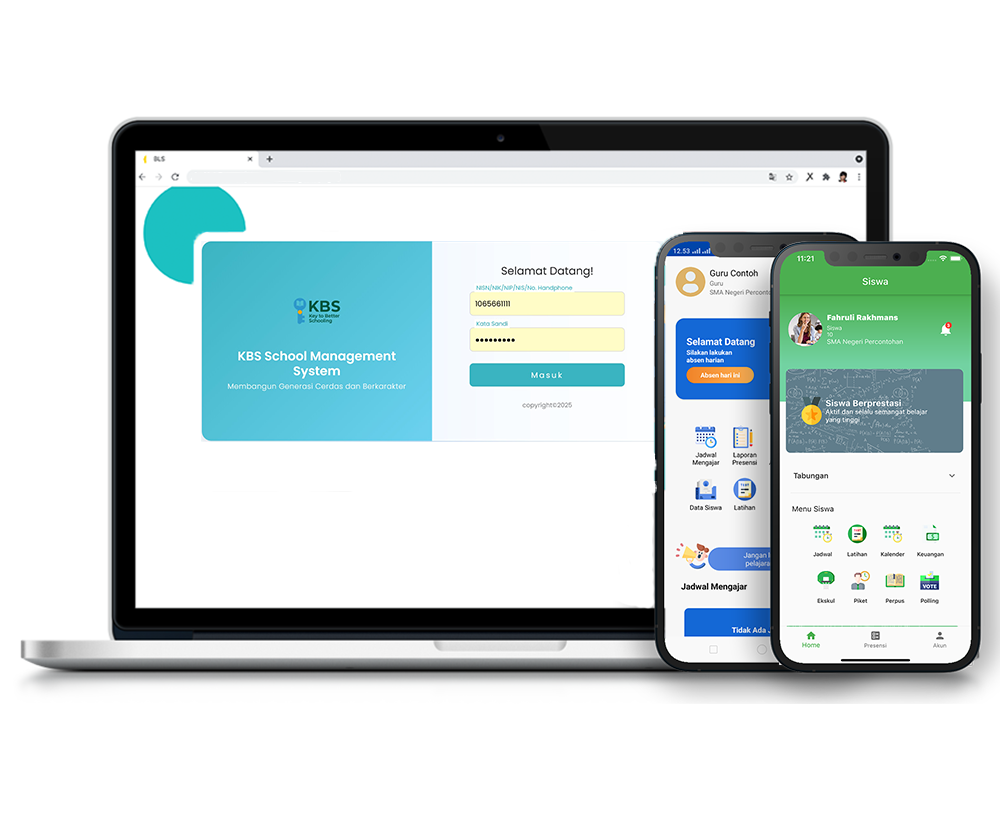
In this context, KBS SMS (Key to Better Schooling – School Management System) was developed to support schools’ flexibility in managing various assessment models according to the needs of each school.
Conclusion
The future of school assessment does not lie in choosing between digital or manual.
The future of assessment lies in the ability of schools to build an assessment system that is able to measure students’ competencies comprehensively, relevantly, and meaningfully.
Digitalization is not the final goal.
Technology is only a tool.
What matters most is how schools utilize various assessment approaches to help students develop into critical, creative, adaptive learners who are ready to face future challenges.
Thus, schools need to move beyond the debate of digital versus manual and focus on a more important question:
• "How can we design assessments that truly help students learn and grow?"
FAQ (Frequently Asked Questions)
Will the future of school assessment be fully digital?
No. Global trends show that schools will use a combination of various assessment methods, both digital and non-digital.
What is meant by Hybrid Assessment?
Hybrid Assessment is a combination of various assessment methods such as multiple-choice questions, essays, projects, case studies, and portfolios.
Why is it not enough for schools to use only multiple-choice questions?
Because not all competencies can be measured through multiple-choice questions. Critical thinking, argumentation, and creativity require other forms of assessment.
Can technology replace the role of teachers in assessment?
No. Technology functions to assist teachers, not replace them.
What competencies need to be measured in 21st-century education?
Critical Thinking, Problem Solving, Creativity, Communication, Collaboration, Digital Literacy, Adaptability, and Self-Regulated Learning.
References
-
UNESCO. (2023). Global Education Monitoring Report 2023: Technology in Education – A Tool on Whose Terms?
-
UNESCO. (2021). Reimagining Our Futures Together: A New Social Contract for Education.
-
OECD. (2023). PISA 2022 Results.
-
OECD. (2021). 21st Century Readers: Developing Literacy Skills in a Digital World.
-
Black, P., & Wiliam, D. (1998). Assessment and Classroom Learning.
-
Wiggins, G. (1998). Educative Assessment: Designing Assessments to Inform and Improve Student Performance.
-
Brookhart, S. M. (2010). How to Assess Higher-Order Thinking Skills in Your Classroom.
-
Anderson, L. W., & Krathwohl, D. R. (2001). A Taxonomy for Learning, Teaching, and Assessing.
-
Redecker, C., & Johannessen, Ø. (2013). Changing Assessment: Towards a New Assessment Paradigm Using ICT.
-
Ministry of Education, Culture, Research, and Technology of the Republic of Indonesia. (2022). Learning and Assessment Guide for the Merdeka Curriculum.
Content Copyright
This article is official content owned by PT. Kreasi Bali Sasmita Nusantara as the developer of KBS SMS (Key to Better Schooling – School Management System).
All contents of this article are protected by copyright. It is prohibited to copy, distribute, or republish part or all of this article without written permission from PT. Kreasi Bali Sasmita Nusantara (KBS SMS) as the copyright owner.