Admin KBS
Author
Introduction
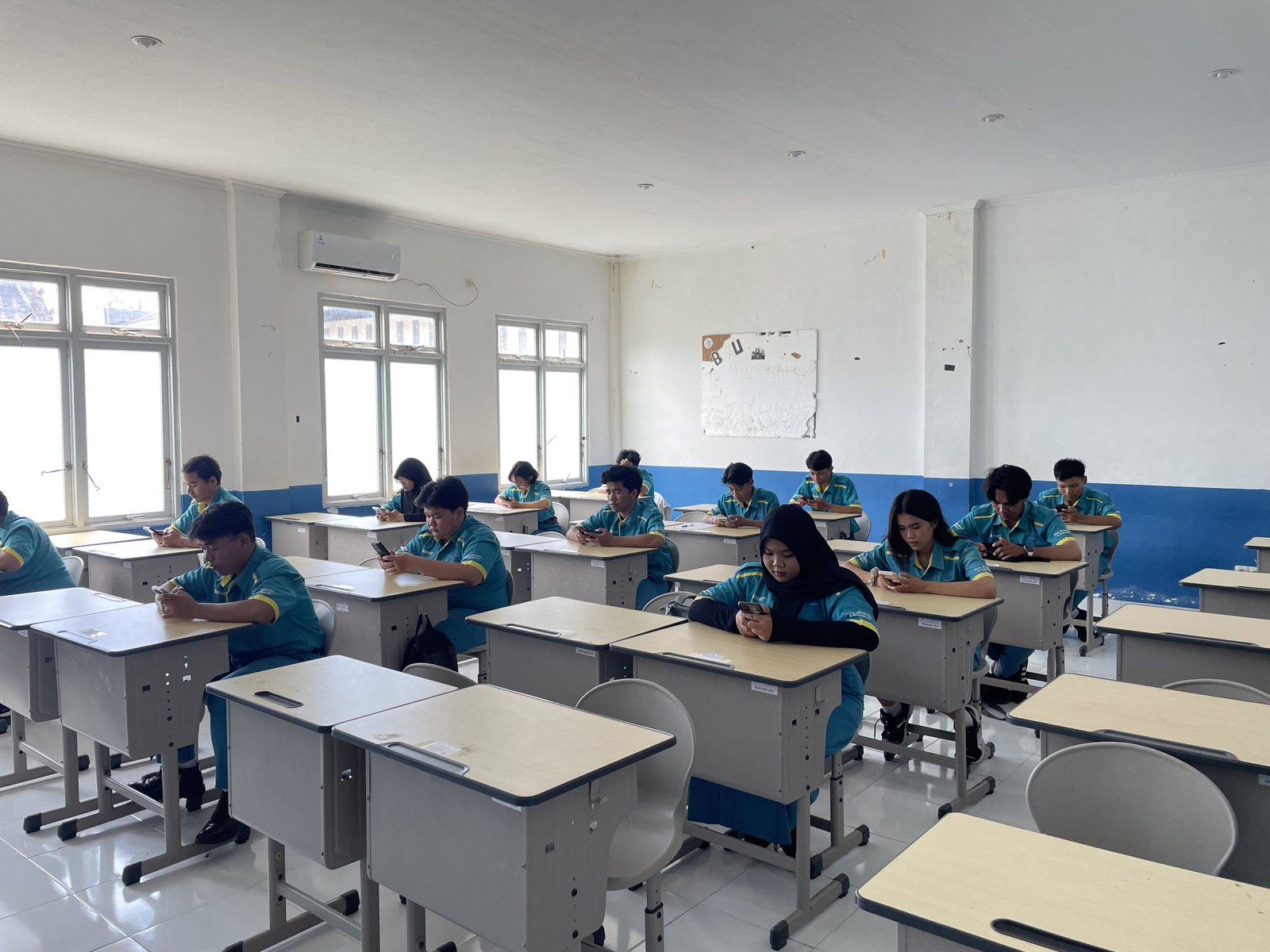
Recently, there has been a fairly lively discussion in various schools regarding the effectiveness of digital examinations compared to manual essay-based examinations.
Some parties have expressed concerns that the use of digital examinations, especially those dominated by multiple-choice questions, makes students less encouraged to study in depth. There is even an assumption that students tend to rely on luck when answering questions, causing critical thinking skills, writing skills, and literacy to become less developed.
On the other hand, many teachers also realize that conducting manual essay-based examinations has its own challenges. The correction process takes a long time, administrative workload increases, and grade processing becomes more complex.
This debate raises interesting questions:
• When digital examinations are questioned, are we actually looking at the real root of the problem?
• Or are we too focused on the medium and forgetting a more fundamental issue?
Quality Assessment Is Not Determined by the Medium
A quality school assessment is not determined by whether the examination is conducted digitally or manually.
What matters more is how the assessment is designed to measure students’ competencies comprehensively through a combination of multiple-choice questions, essays, projects, portfolios, presentations, and various other assessment methods relevant to the needs of 21st-century education.
In other words:
• The main problem in education is not necessarily digitalization.
• The real problem may lie in the quality of the assessment design being used.
Why Are Digital Examinations Being Questioned?
Concerns about digital examinations basically come from a good intention to improve the quality of education.
Some arguments that often arise include:
• students are less prepared for examinations;
• multiple-choice questions are considered too easy to guess;
• critical thinking skills are less developed;
• students’ writing skills and literacy are declining;
• the learning process becomes too grade-oriented.
These concerns certainly cannot be ignored.
However, the question is:
• Are all these problems truly caused by digitalization?
When the Medium Becomes the Main Suspect
In many cases, when students’ learning outcomes are considered unsatisfactory, attention often immediately turns to the medium being used.
If the examination is conducted digitally, digitalization is considered the cause.
If multiple-choice questions are used, then multiple-choice questions are considered the source of the problem.
However, in educational assessment, the medium is only a tool.
• Paper is a tool.
• Computers are tools.
• Applications are tools.
• Technology is a tool.
What determines the quality of assessment is not the tool being used, but how that tool is used to measure students’ competencies.
A question that only measures memorization will remain a memorization question, whether it is answered on paper or through a digital application.
Conversely, a question designed to measure analysis, evaluation, and problem-solving will still be able to measure those abilities even if it is presented digitally.
Therefore, it is possible that we are focusing on the wrong issue when we only debate the examination medium.
The Real Root Problems
The Dominance of Low-Level Cognitive Questions
Many assessments still focus on:
• remembering facts;
• memorizing definitions;
• recognizing the correct answer.
Meanwhile, today’s world requires higher abilities such as:
• critical thinking;
• analyzing information;
• solving problems;
• making decisions;
• innovating.
If the questions given are still at a low cognitive level, then changing from digital to manual will not have a significant impact.
Changes in the Learning Culture of the Digital Generation
Today’s generation grows up in a very different environment compared to previous generations.
Information is available everywhere.
Access to knowledge is becoming easier.
The challenge of modern education is no longer simply memorizing information, but how to process information into meaningful understanding.
Dependence on One Type of Assessment
There is no perfect assessment method.
• Multiple-choice questions have strengths.
• Essays have strengths.
• Projects have strengths.
• Presentations have strengths.
• Portfolios have strengths.
When schools rely on only one type of assessment, the picture of students’ competencies becomes incomplete.
Why Essays Remain Important
In the midst of rapid technological development, essays still hold a very important position in education.
Through essays, teachers can assess:
• critical thinking skills;
• the ability to construct arguments;
• written communication skills;
• the ability to connect various concepts;
• students’ literacy skills.
Essays help students learn to organize ideas and express their thoughts systematically.
These competencies will continue to be needed both in higher education and in the world of work.
Therefore, the existence of essay assessment still needs to be maintained.
Why Digital Assessment Remains Relevant
Digital assessment also has various advantages that support the improvement of educational quality.
Efficiency
Teachers can save time in administrative processes and in correcting objective questions.
Objectivity
Assessment becomes more consistent and reduces the potential for human error.
Data Analysis
Schools can obtain information regarding:
• students’ competency achievements;
• question difficulty levels;
• remedial needs;
• learning effectiveness.
Transparency
The entire assessment process can be documented more effectively and traced more easily.
Therefore, the challenge is not to abandon digitalization, but to use technology more appropriately to support assessment quality.
What Are Advanced Countries Doing?
Interestingly, countries with advanced education systems are not moving back completely to manual examinations.
Instead, they are developing increasingly diverse assessment systems.
Some approaches being developed include:
Hybrid Assessment
Combining multiple-choice questions and essays.
Authentic Assessment
Measuring students’ abilities in real-world contexts.
Project-Based Assessment
Measuring competencies through projects and works.
Portfolio Assessment
Measuring students’ competency development continuously.
Performance Assessment
Measuring skills through practice and direct demonstration of abilities.
Global education trends show that the future of assessment is not about choosing between digital or manual, but about combining various assessment methods in a balanced way.
Hybrid Assessment: A More Rational Middle Ground
Rather than opposing digital examinations and manual examinations, a more constructive approach is to utilize the strengths of both.
For example:
• 60% Multiple-Choice Questions
• 30% Essays
• 10% Case Study or Project
Multiple-choice questions are used to measure mastery of basic concepts efficiently.
Essays are used to measure critical thinking and argumentation skills.
Case studies or projects are used to measure the ability to apply knowledge in real-life situations.
This approach allows schools to obtain a more complete picture of students’ competencies without excessively increasing administrative workload.
Recommendations for Schools
Increase the Proportion of HOTS Questions
Focus on the abilities of:
• analysis;
• evaluation;
• problem-solving;
• creativity.
Combine Various Forms of Assessment
Use multiple-choice questions, essays, projects, presentations, and portfolios in a balanced way.
Use Clear Assessment Rubrics
Especially for essay, project, and presentation assessments.
Use Technology Strategically
Technology should be used to reduce administrative work so that teachers can focus more on learning.
Focus on Competencies
Assessment should help students grow, not merely produce scores.
When Our Focus Changes
Perhaps the question we need to ask is no longer:
• "Are digital examinations good or bad?"
But rather:
• "Are the assessments we use already capable of measuring the competencies we want to build?"
Because ultimately, the quality of education is not determined by whether examinations are conducted on paper or through a computer screen.
The quality of education is determined by the school’s ability to design assessments that are relevant, meaningful, and able to encourage students to think more deeply.
Towards a More Modern School Assessment Ecosystem
In the future, schools need a more flexible and integrated assessment system.
Schools need to be able to manage:
• multiple-choice questions;
• essays;
• hybrid assessment;
• project assessment;
• portfolio assessment;
• performance assessment;
• learning outcome analysis.
In this context, a modern school management platform is no longer sufficient if it only provides digital examination features.
Such a platform needs to become a central hub for managing various assessment models used by schools.
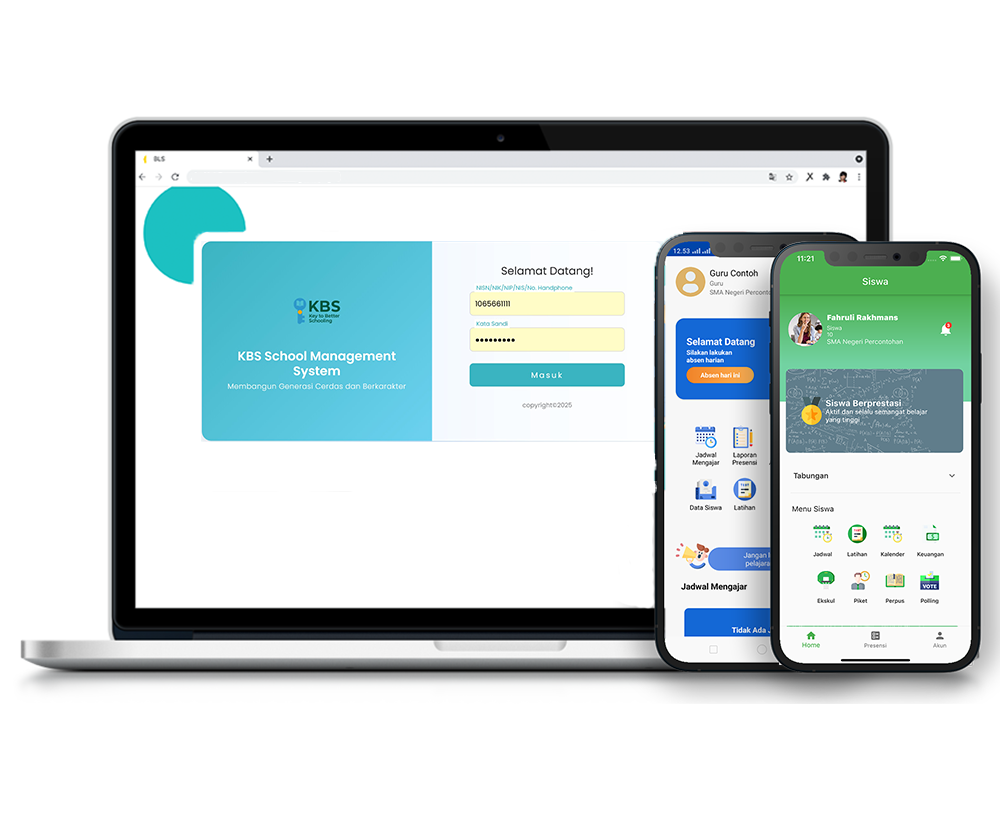
This philosophy is one of the development directions of KBS SMS (Key to Better Schooling – School Management System), namely to support various school assessment approaches flexibly and integratively within one platform.
Conclusion
When digital examinations are questioned, perhaps we need to pause for a moment and look at the issue from a broader perspective.
The main problem in education does not always lie in the medium used to conduct examinations.
In many cases, the root of the problem actually lies in assessment design, question quality, and the education system’s ability to measure students’ competencies comprehensively.
Digitalization is not the final goal.
Digitalization is only a tool.
What matters most is how that tool is used to help schools build assessments that are higher in quality, more meaningful, and more relevant to the needs of 21st-century education.
FAQ (Frequently Asked Questions)
Are digital examinations better than manual examinations?
Not always. The most determining factor in assessment quality is the design of the questions and the competencies being measured.
Do multiple-choice questions make students think less critically?
Not always. Multiple-choice questions designed with a HOTS approach can still measure analytical and problem-solving abilities.
Why are essay examinations still important?
Because essays help measure students’ critical thinking, argumentation, literacy, and written communication skills.
What is meant by Hybrid Assessment?
Hybrid Assessment is a combination of various assessment methods such as multiple-choice questions, essays, case studies, projects, and portfolios.
How does technology help school assessment?
Technology helps manage question banks, conduct examinations, process grades, analyze learning outcomes, and document assessments more efficiently.
What is KBS SMS?
KBS SMS (Key to Better Schooling – School Management System) is a school management platform that supports the integrated management of academics, administration, and various school assessment models.
References
-
UNESCO. (2023). Global Education Monitoring Report 2023: Technology in Education – A Tool on Whose Terms?
-
UNESCO. (2021). Reimagining Our Futures Together: A New Social Contract for Education.
-
OECD. (2023). PISA 2022 Results.
-
OECD. (2021). 21st Century Readers: Developing Literacy Skills in a Digital World.
-
Black, P., & Wiliam, D. (1998). Assessment and Classroom Learning.
-
Wiggins, G. (1998). Educative Assessment: Designing Assessments to Inform and Improve Student Performance.
-
Brookhart, S. M. (2010). How to Assess Higher-Order Thinking Skills in Your Classroom.
-
Brookhart, S. M. (2018). How to Create and Use Rubrics for Formative Assessment and Grading.
-
Anderson, L. W., & Krathwohl, D. R. (2001). A Taxonomy for Learning, Teaching, and Assessing.
-
Nitko, A. J., & Brookhart, S. M. (2014). Educational Assessment of Students.
-
Redecker, C., & Johannessen, Ø. (2013). Changing Assessment: Towards a New Assessment Paradigm Using ICT.
-
Selwyn, N. (2016). Education and Technology: Key Issues and Debates.
-
Luckin, R., et al. (2016). Intelligence Unleashed: An Argument for AI in Education.
-
Ministry of Education, Culture, Research, and Technology of the Republic of Indonesia. (2022). Learning and Assessment Guide for the Merdeka Curriculum.
-
Ministry of Education, Culture, Research, and Technology of the Republic of Indonesia. (2021). National Assessment as an Instrument for Mapping Education Quality.
Content Copyright
This article is official content owned by PT. Kreasi Bali Sasmita Nusantara as the developer of KBS SMS (Key to Better Schooling – School Management System).
All contents of this article are protected by copyright. It is prohibited to copy, distribute, or republish part or all of this article without written permission from PT. Kreasi Bali Sasmita Nusantara (KBS SMS) as the copyright owner.