Admin KBS
Author
Introduction
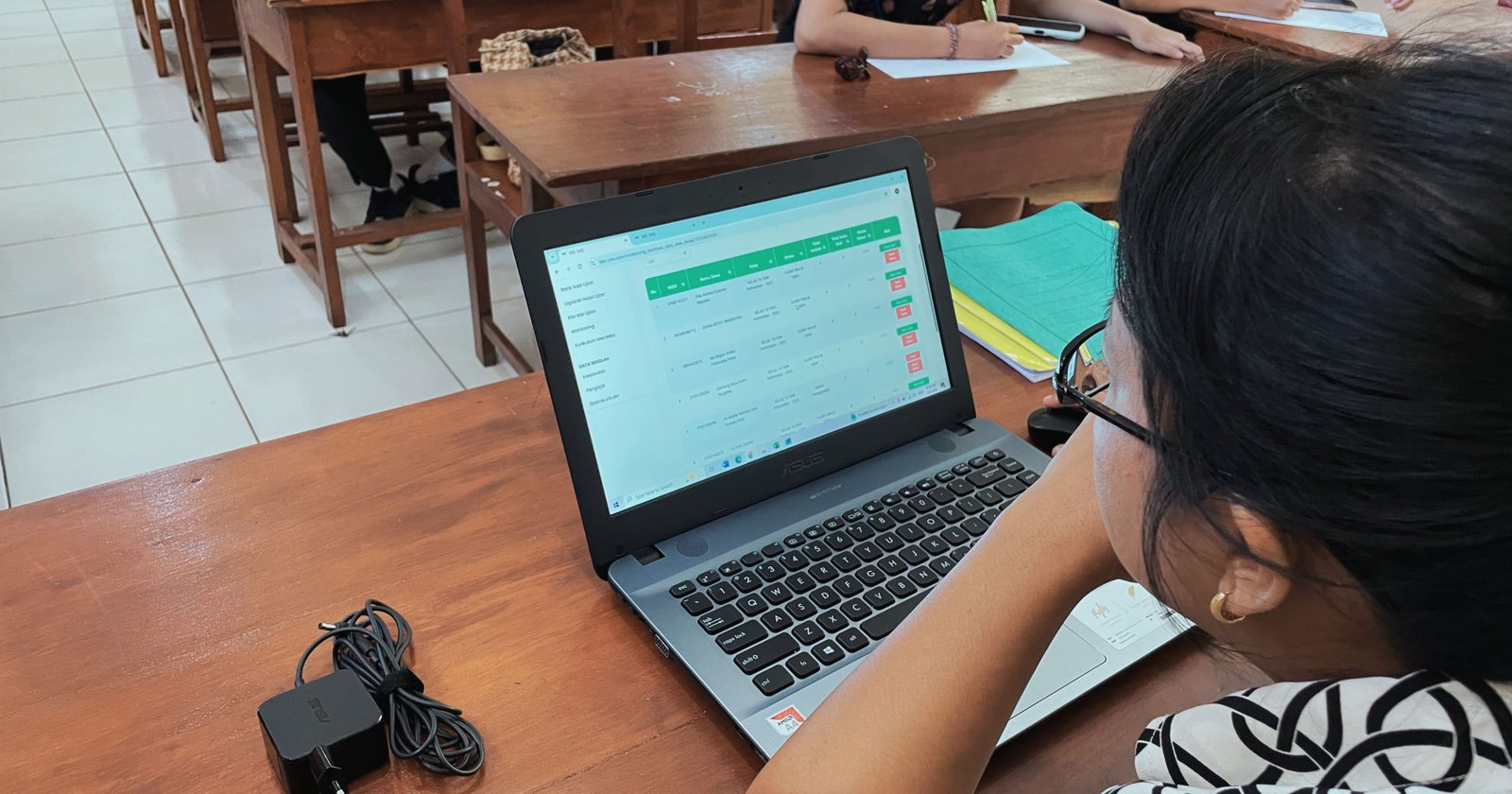
In recent years, many schools have begun adopting digital examinations as part of educational transformation.
Initially, the main goal of examination digitalization was relatively simple: to reduce paper usage, speed up the correction process, and improve the efficiency of academic administration.
However, as educational technology continues to develop, a bigger question has emerged:
• Is the purpose of assessment digitalization merely to replace paper with computer screens?
• Or is digitalization actually the first step toward a more fundamental transformation, namely building schools that are able to make decisions based on data?
In the modern education era, the greatest value of digitalization does not lie in the examination process itself, but in the school’s ability to use assessment data to improve the quality of learning.
Therefore, the journey of educational transformation should not stop at digital examinations.
This transformation must continue toward the formation of a Data-Driven School.
Schools Generate a Very Large Amount of Data
Every day, schools generate various types of data.
These include:
• student attendance;
• assignment scores;
• examination results;
• learning activities;
• competency development;
• behavior records;
• extracurricular activities;
• psychological assessment results;
• student portfolios.
Unfortunately, in many schools, this data is still scattered across various documents and separate systems.
As a result:
• data is difficult to analyze;
• student development trends are difficult to monitor;
• decisions are often based solely on intuition;
• the potential of data as a tool for quality improvement has not been optimally utilized.
In the digital era, data is one of the strategic assets owned by schools.
When Digital Examinations Only Replace Paper
Many schools have used digital examinations, but the benefits gained are still limited.
Digital examinations only function as:
• a medium for conducting examinations;
• an automatic correction tool;
• a means of entering grades.
In fact, the actual potential is far greater.
If used optimally, assessment data can help schools answer various important questions:
• What competencies are most mastered by students?
• Which materials are the most difficult to understand?
• Which subjects require intervention?
• Are the teaching methods being used effective?
• How do students’ competencies develop over time?
These questions cannot be answered only through conventional grade sheets.
A system is needed that is able to transform data into information and information into a basis for decision-making.
From Digital Assessment to Learning Analytics
Global education development shows that the focus of assessment is beginning to shift.
Previously, the main focus was:
• Assessment for Scoring
but now it is developing toward:
• Assessment for Learning
and
• Assessment for Decision Making
In this new paradigm, assessment does not only produce scores.
Assessment produces insight.
Through Learning Analytics, schools can understand:
Patterns of Competency Achievement
Which competencies students have and have not mastered.
Learning Development Trends
Changes in student performance over time.
Early Warning System
Early detection of students who need support.
Learning Effectiveness
Evaluation of the strategies and teaching methods used by teachers.
In other words, assessment data becomes a tool to continuously improve the quality of education.
What Is Meant by a Data-Driven School?
A data-driven school is a school that uses data systematically to support academic and managerial decision-making.
Decisions are not based only on assumptions or perceptions.
Decisions are based on measurable facts.
In a data-driven school, school leaders can answer:
• What is the main learning problem right now?
• Which students need additional support?
• Which subjects need improvement?
• Which school programs are the most effective?
• What interventions need to be carried out?
This approach helps schools move from an administrative culture toward a culture of continuous improvement.
Why Are Data-Driven Schools Becoming a Necessity?
The Complexity of Modern Education
The amount of data generated by schools is increasing and becoming difficult to manage manually.
Accountability Demands
Schools are required to demonstrate achievements and program effectiveness objectively.
Learning Personalization
Every student has different needs.
Data helps schools provide more appropriate interventions.
Continuous Quality Improvement
Data-based decisions allow improvements to be made in a more measurable way.
The Role of Assessment Digitalization in Building Data-Driven Schools
Assessment digitalization is the main foundation toward becoming a data-driven school.
Through digitalization, schools can build:
Structured Question Banks
Questions are stored and can be analyzed continuously.
Academic Dashboards
Learning outcome information is presented in real time.
Competency Analysis
Monitoring students’ competency achievements.
Question Quality Analysis
Evaluating the validity and effectiveness of assessment instruments.
Student Development History
Longitudinal documentation of students’ development.
This is the strategic value that cannot be optimally obtained through manual systems.
The Future of Assessment: From Scores to Insights
For many years, assessment results often ended as numbers.
However, numbers are only the starting point.
The future of assessment is moving toward:
• insight;
• recommendations;
• interventions;
• learning personalization.
Schools do not only need to know that a student scored 75.
Schools need to understand:
• why the score is 75;
• which competencies have not been mastered;
• what support is needed;
• what improvement strategy is most effective.
This is the transformation currently taking place in the global education landscape.
Challenges in Implementing Data-Driven Schools
Although this transformation promises many benefits, it also faces challenges.
Data Quality
Data must be accurate and consistent.
Data Literacy
Teachers and school leaders need to understand how to read and use data.
Technology Infrastructure
A system is needed that is able to manage data effectively.
Changes in Work Culture
Data-driven transformation requires a change in mindset across the entire school community.
However, these challenges can be overcome through gradual and well-planned implementation.
Recommendations for Schools
Start with Assessment Digitalization
Build a data foundation through a good digital assessment system.
Integrate Academic Data
Avoid data being scattered across various systems that are not connected to each other.
Build an Academic Dashboard
Present data in a form that is easy to understand and use.
Improve Teachers’ Data Literacy
Teachers need to be able to use data to support learning.
Focus on Decision-Making
The final goal is not to collect data, but to produce better decisions.
Towards a Data-Driven Education Ecosystem
In the future, schools do not only need a digital examination system.
Schools need an ecosystem that is able to integrate:
• assessment;
• academics;
• attendance;
• competency development;
• learning analytics;
• reporting;
• decision-making.
In this context, assessment digitalization is the entry point toward a larger transformation.
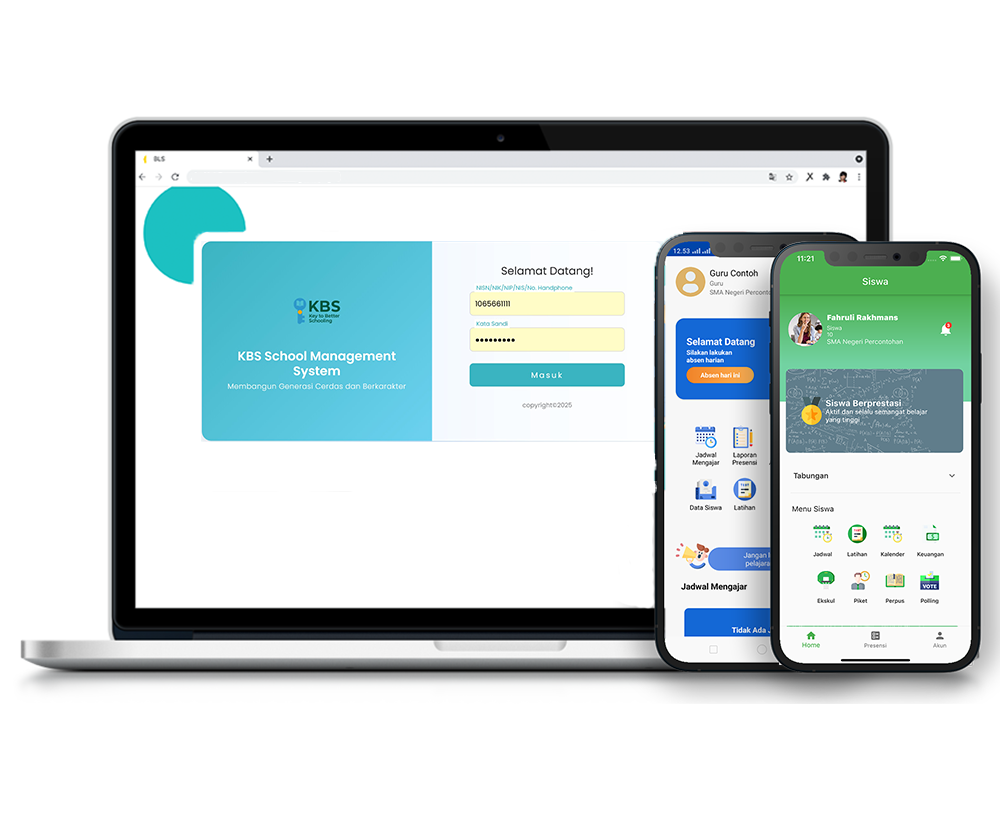
This philosophy is one of the development directions of KBS SMS (Key to Better Schooling – School Management System), namely helping schools transform from merely being technology users into educational organizations that are able to use data to improve the quality of learning and school management.
Conclusion
Educational transformation does not stop when schools successfully conduct examinations digitally.
True transformation begins when assessment data is used to understand students, improve learning, and support better decision-making.
Therefore, the final goal of digitalization is not merely to create paperless examinations.
The final goal is to build schools that are smarter, more adaptive, and more capable of growing through the use of data.
The future of education is not only about digitalization.
The future of education is about how schools transform data into insight, insight into action, and action into continuous quality improvement.
FAQ (Frequently Asked Questions)
What is meant by a data-driven school?
A data-driven school is a school that uses data systematically to support academic and managerial decision-making.
What is the relationship between digital examinations and data-driven schools?
Digital examinations generate data that can be analyzed to understand student development and improve learning quality.
What is Learning Analytics?
Learning Analytics is the process of collecting, analyzing, and using learning data to improve student learning outcomes.
Why is data important for schools?
Data helps schools make more objective, measurable, and fact-based decisions.
Do data-driven schools only require technology?
No. In addition to technology, schools also need work culture, data literacy, and leadership that support data-based decision-making.
References
-
UNESCO. (2023). Global Education Monitoring Report 2023: Technology in Education – A Tool on Whose Terms?
-
UNESCO. (2021). Reimagining Our Futures Together: A New Social Contract for Education.
-
OECD. (2023). PISA 2022 Results.
-
OECD. (2021). 21st Century Readers: Developing Literacy Skills in a Digital World.
-
Siemens, G., & Long, P. (2011). Penetrating the Fog: Analytics in Learning and Education.
-
Ferguson, R. (2012). Learning Analytics: Drivers, Developments and Challenges.
-
Redecker, C., & Johannessen, Ø. (2013). Changing Assessment: Towards a New Assessment Paradigm Using ICT.
-
Black, P., & Wiliam, D. (1998). Assessment and Classroom Learning.
-
Brookhart, S. M. (2010). How to Assess Higher-Order Thinking Skills in Your Classroom.
-
Ministry of Education, Culture, Research, and Technology of the Republic of Indonesia. (2022). Learning and Assessment Guide for the Merdeka Curriculum.
Content Copyright
This article is official content owned by PT. Kreasi Bali Sasmita Nusantara as the developer of KBS SMS (Key to Better Schooling – School Management System).
All contents of this article are protected by copyright. It is prohibited to copy, distribute, or republish part or all of this article without written permission from PT. Kreasi Bali Sasmita Nusantara (KBS SMS) as the copyright owner.