KBS Team
Author
Introduction
The development of digital technology has brought significant changes to many aspects of life, including the education sector. Schools today are not only expected to improve the quality of learning, but also to manage academic processes more effectively and efficiently.
One of the academic processes that plays a very important role is the implementation of school examinations. Exams are not only tools to evaluate students’ learning outcomes, but also serve as a basis for teachers and schools to assess the effectiveness of the learning process.
However, conventional examination methods often create various challenges, ranging from time-consuming grading processes to errors in score processing. Therefore, more schools are beginning to adopt digital school examination systems as a more modern, efficient, and accurate solution.
Challenges of Conventional Examinations in Schools
Although conventional exam methods have been used for many years, this system has several limitations that often create difficulties for schools.
-
Time-Consuming Grading Process
In paper-based exam systems, teachers must manually check students’ answers. If the number of students is large, this process can take a significant amount of time, especially for subjects with many multiple-choice or essay questions.
As a result, exam results are often not immediately available to students.
-
Risk of Errors in Score Processing
Manual score processing also carries the risk of mistakes, such as miscalculations, data entry errors, or inconsistencies in grade recaps.
Even small errors in score processing can affect students’ academic reports and school administration.
-
Difficulty in Monitoring Exam Implementation
In conventional exams, supervision largely depends on invigilators in the classroom. This makes the monitoring process less integrated and difficult for the school to oversee in real time.
-
High Paper Usage
Paper-based exams require many printed documents, such as exam question sheets, answer sheets, and grade recap documents. In addition to increasing operational costs for schools, high paper usage also has environmental impacts.
Why Schools Need a Digital Examination System
To overcome these challenges, many educational institutions are beginning to adopt digital school examination systems.
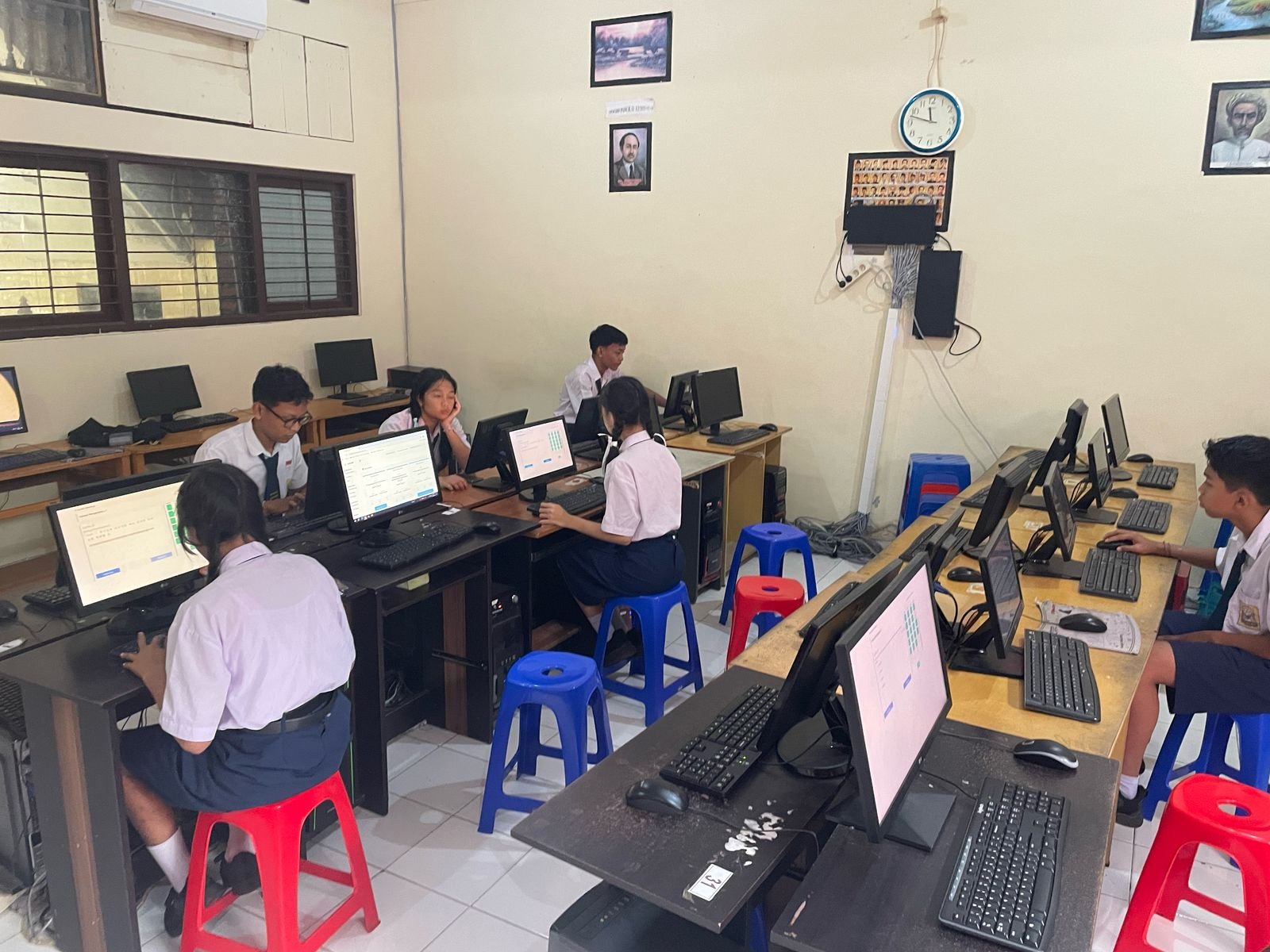
A digital examination system allows schools to manage the entire exam process through an integrated digital platform. From question creation and exam implementation to score processing, everything can be handled within one connected system.
By using a school management application, the examination process becomes:
-
Efficient
-
Transparent
-
Integrated
-
Accurate
In addition, digital exam systems also support the digital transformation of education, which has become an important need for schools today.
The Role of School Management Systems in Digital Examinations
One solution that schools can use to manage digital examinations is a School Management System (SMS).
A School Management System is a digital platform designed to help schools manage various academic and administrative activities in an integrated manner.
In the context of exam implementation, this system enables schools to manage the entire examination process more systematically, from planning to evaluating exam results.
Through a school management system, teachers and school administrators can manage examinations without relying on time-consuming manual processes.
Digital Examination Features in KBS SMS
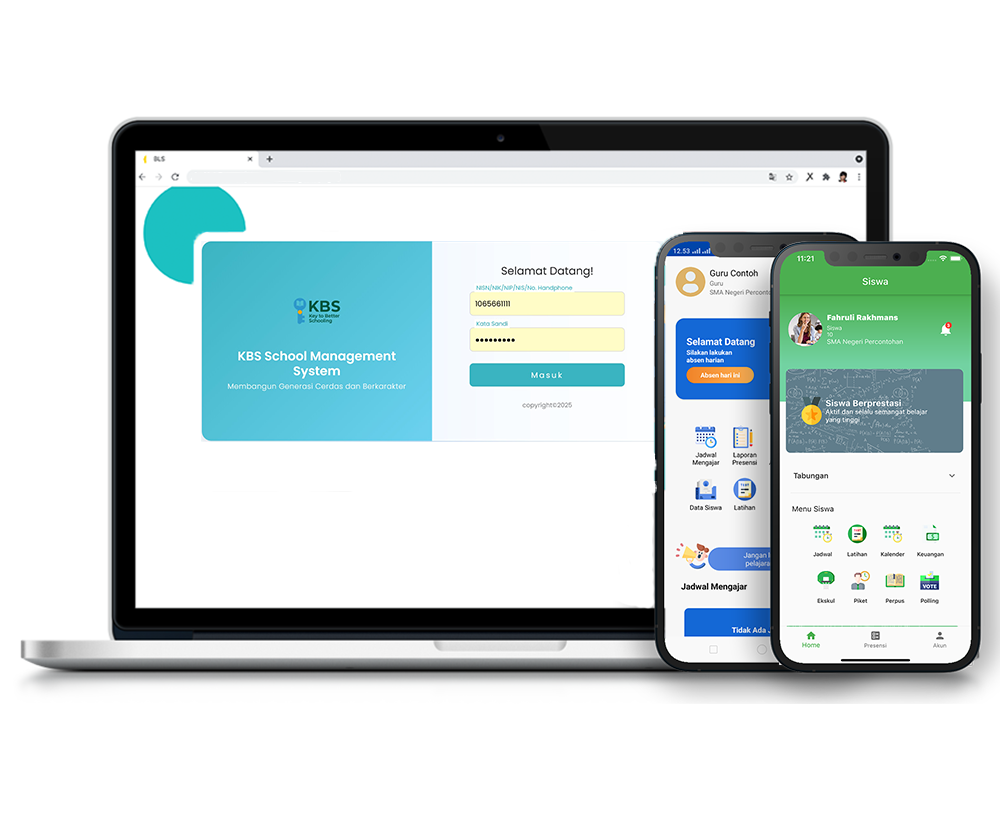
As a school management application, KBS SMS (Key to Better Schooling – School Management System) provides various features that support the implementation of digital school examinations.
Some of the main features of the digital exam system in KBS SMS include:
-
Digital Question Bank
Teachers can create and store exam questions within a digital question bank system. These questions can be reused for various types of examinations such as:
-
Daily quizzes
-
Mid-semester assessments (PTS)
-
Final semester assessments (PAS)
-
School examinations
With a digital question bank, teachers can manage exam questions more systematically.
-
Exam Scheduling
Schools can organize exam schedules in a structured way through the system. Exam schedules can be adjusted based on subjects, classes, and exam times.
This helps schools manage exam implementation in a more organized and structured manner.
-
Real-Time Exam Monitoring
Through the digital exam system, schools can monitor exam implementation directly. Teachers or school operators can see the progress of exams in real time, including the number of students currently taking the exam.
This feature helps improve transparency in exam implementation.
-
Automatic Score Processing
One of the main advantages of a digital exam system is its ability to perform automatic grading, especially for multiple-choice questions.
With this system, exam results can be processed automatically, allowing teachers to obtain students’ evaluation results much faster.
-
Exam Result Recap and Analysis
The system can also generate automatic reports of exam results, including student score recaps and exam analysis.
This data helps teachers and schools evaluate the effectiveness of the learning process.
Benefits of Digital Examination Systems for Schools
The implementation of a digital exam system provides various benefits for schools, teachers, and students.
-
Time Efficiency
The process of creating questions, conducting exams, and processing scores can be automated through the system, saving significant time for teachers and school administrators.
-
Reduced Administrative Errors
With a digital system, score processing and data recaps are handled automatically, minimizing the risk of calculation errors.
-
Transparency in Exam Implementation
Digital systems allow schools to monitor exam implementation in a more transparent and integrated manner.
-
Supporting Education Digitalization
The use of digital exam systems is part of schools’ efforts to adopt educational technology and support the digital transformation of education in the modern era.
-
Environmentally Friendly
By reducing paper usage in exam implementation, schools can also contribute to more environmentally sustainable educational practices.
Conclusion
Digital transformation in education is no longer an option, but a necessity for schools that aim to improve the quality of academic management.
School examinations are one of the key processes that can be improved through the implementation of digital school examination systems. By using an integrated system, schools can manage exams more efficiently, accurately, and transparently.
Through platforms such as KBS SMS (Key to Better Schooling – School Management System), schools can manage the entire examination process digitally, from question creation to score processing.
Thus, implementing digital exam systems not only improves school operational efficiency but also supports the creation of a more modern, technology-driven educational ecosystem.
References
Politeknik ST. Paulus. (2020). Implementation of Computer-Based Examination Systems in Education.
https://www.poltekstpaul.ac.id/jurnal/index.php/jelekn/article/download/148/96/
INSTIKI. (2021). Implementation of Information Technology in Digital Education Systems.
https://ejournal.instiki.ac.id/index.php/sacies/article/view/78/32
Jurnal Mahasiswa Indonesia. (2022). Utilization of Information Systems in Educational Management.
https://jurnalmahasiswa.com/index.php/Jurihum/article/download/159/140
Content Copyright
This article is official content owned by PT. Kreasi Bali Sasmita Nusantara as the developer of KBS SMS (Key to Better Schooling – School Management System).
All contents of this article are protected by copyright. Copying, distributing, or republishing part or all of this article without written permission from PT. Kreasi Bali Sasmita Nusantara (KBS SMS) as the copyright holder is strictly prohibited.